Smart Classrooms & Digital Content
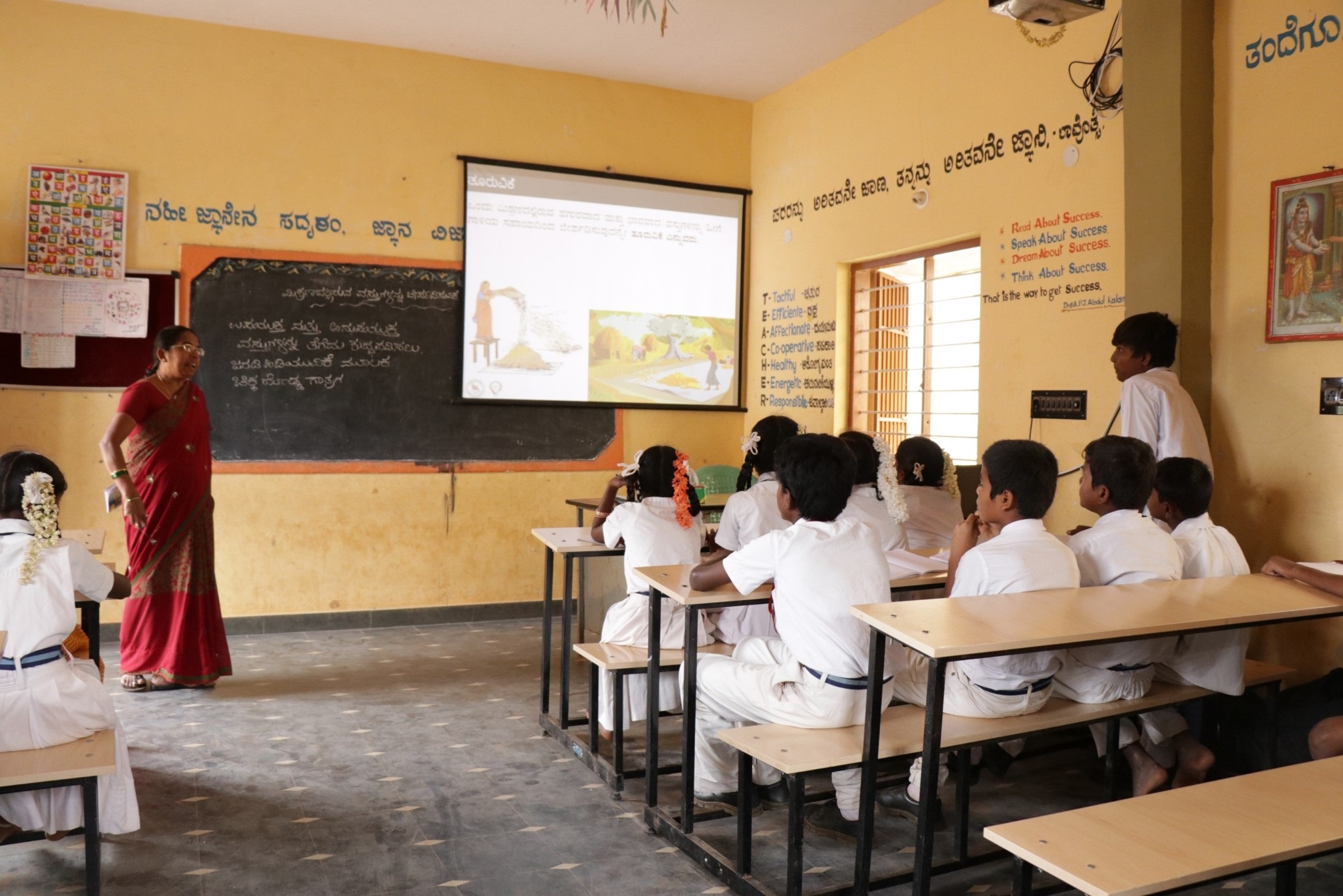
ILP has been shaping classrooms across multiple states through Multi-Dimensional Learning Spaces. This MDLS framework which is NCERT-aligned, open-source visual content for Grades 4-10, supported by teacher training — is transforming classrooms from chalk-and-talk spaces into places where concepts come alive through visuals, interactivity, and exploration. The content is available in 7 Indian languages and featured on the Government of India’s Diksha portal.
A picture is worth a thousand words. A video lesson in a child’s own language is worth even more.
In many government schools, teaching relies entirely on textbooks and blackboard explanations. For students learning in a second or third language, or for concepts that are inherently visual — the water cycle, cell division, planetary motion — text alone isn’t enough. Research consistently shows that multimedia content improves comprehension and retention, especially for students from low-literacy households where academic support at home is limited. Yet most government schools lack the content, equipment, or trained teachers to use digital learning effectively.
Open-source, multilingual digital content — designed for the teacher, not to replace them
ILP’s Smart Classroom program sets up projector-based digital classrooms in government schools equipped with open-source, NCERT-aligned interactive content for Math, Science, and Social Science across Grades 4-10. The content includes animated lessons, audio-visual explanations, and interactive exercises — available in 7 Indian languages: Kannada, Tamil, Telugu, Hindi, Odia, Marathi, and English. The content is designed to support the teacher’s lesson plan, not replace it.
All content is open-source and has been featured on the Government of India’s Diksha portal, the national digital education platform. This means it’s freely available, continuously updated, and endorsed by national education authorities.
7 Indian languages
Content available in Kannada, Tamil, Telugu, Hindi, Odia, Marathi, and English — so children learn concepts in the language they think in, not just the one they’re tested in.
NCERT-aligned & open-source
Every lesson maps to the textbook curriculum. Content is open-source, featured on the Diksha portal, and continuously updated — no licensing costs, no vendor lock-in.
Teacher-centred design
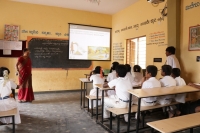
The projector supports the teacher, not replaces them. Teachers decide when to use videos, animations, and exercises within their lesson plan. Training ensures they’re comfortable integrating digital content naturally.
Simple setup, low maintenance
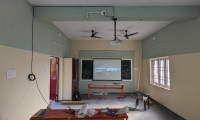
A projector, laptop, and speaker transform any classroom into a smart classroom. Content runs offline — no internet needed. ILP provides installation, training, and ongoing technical support.
From installation to daily classroom use
Here’s how a smart classroom comes to life in a government school.
Equipment setup
A projector, laptop, and speaker are installed in a designated classroom. Content is preloaded so it works offline — no internet dependency. The setup takes a single day and the room continues to serve as a regular classroom. ILP technical team + school staff
Teacher training on digital content
Teachers are trained on how to navigate the content library, select lessons that match their teaching plan, and integrate videos and animations into their regular classes. The focus is on complementing their teaching style, not changing it. ILP trainers + school teachers
Daily use in the classroom
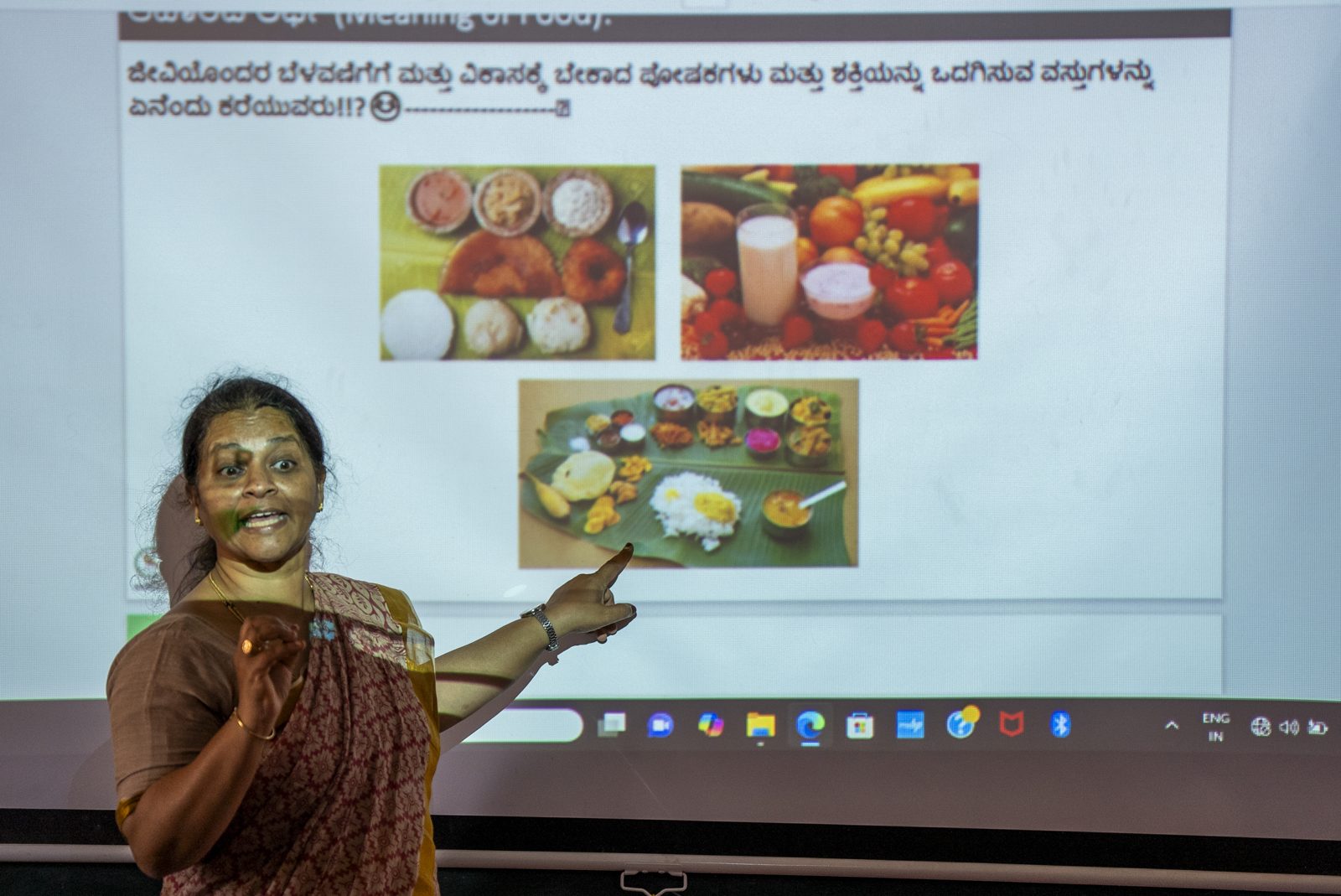
Teachers use the smart classroom for scheduled periods across subjects. Students see animated cell division instead of a static diagram, watch the water cycle in motion instead of reading a paragraph, hear pronunciation in English alongside their mother tongue. Engagement and comprehension improve measurably. Teachers + students
Content updates & ongoing support
ILP provides ongoing technical support and periodic content updates. As new NCERT lessons are developed, they’re added to the content library. ILP field coordinators visit schools to ensure the equipment is being used regularly and help troubleshoot any issues. ILP technical team
Learning becomes visible and engaging
Cumulative impact of ILP’s digital content program
classrooms
supported
through digital content
At ILP, we use technology not as a replacement for learning, but as an enabler — making education more inclusive, engaging, and future-ready. Through ICT-enabled classrooms and digital content, we ensure that government school students are not left on the margins of progress, but are equipped to thrive within it.
Content on India’s national digital education platform
ILP’s digital content is featured on the Government of India’s Diksha portal — the national platform for school education. This open-source endorsement means ILP’s content is freely accessible to any school in India. The smart classroom program has scaled through CSR partnerships across India, and is a core component of the MDLS framework deployed across Karnataka, Tamil Nadu, Odisha, and other states.
Gallery
Make learning visible in a government classroom
One smart classroom setup serves hundreds of students across subjects, year after year