Early Childhood Education
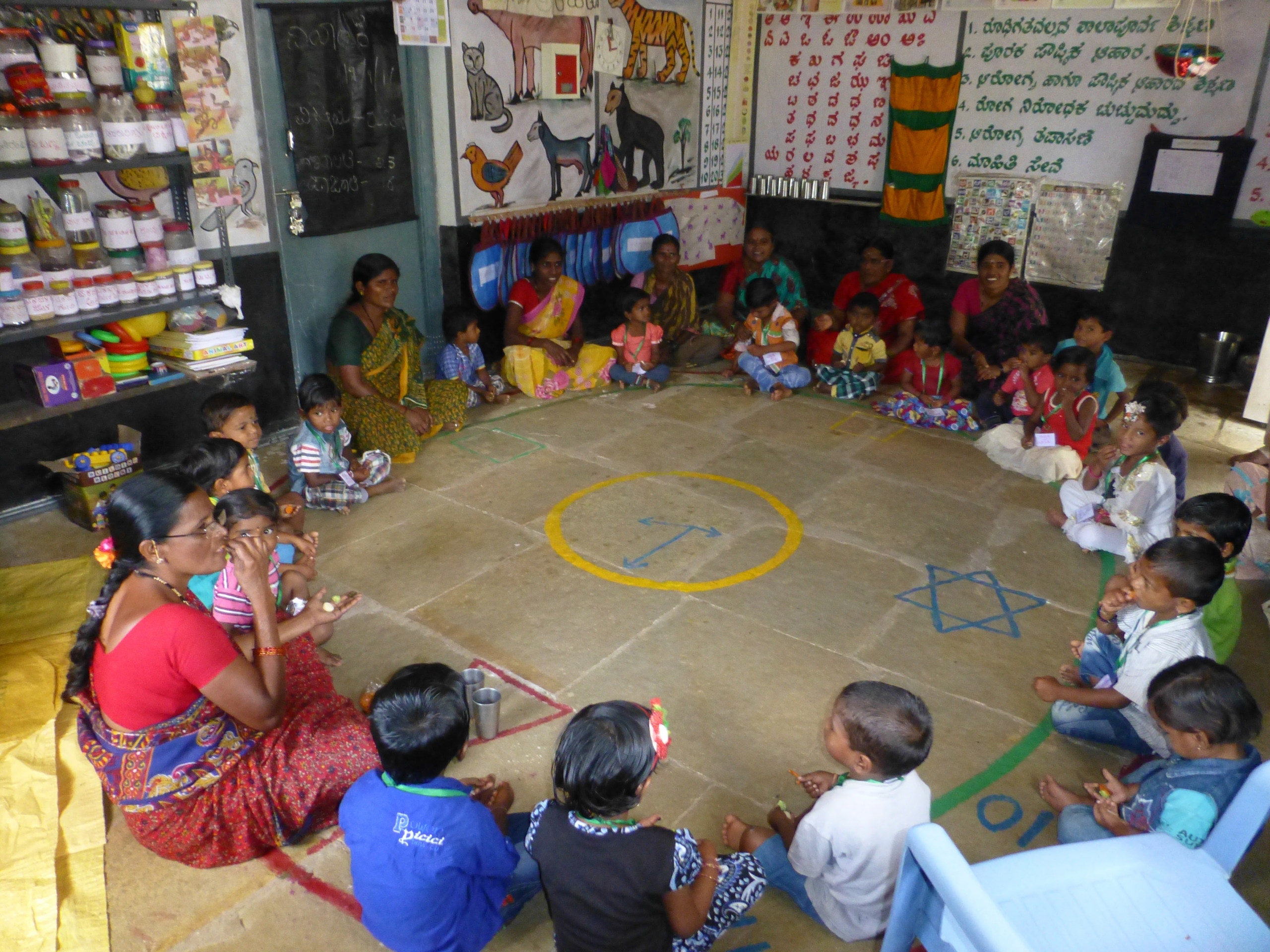
In Bairawadgi, Karnataka, a struggling Anganwadi with just a handful of children was transformed when families realized it was a space for genuine growth rather than mere daycare. Focused teacher training and compassionate parent outreach helped families finally see the profound impact of early childhood development. Deeply moved, the community united to donate land and funds to build a dedicated learning space. Today, that shared belief has sparked a vibrant, play-based haven welcoming 25 to 30 eager children every single day.
85% of brain development occurs before age 6. For millions of children, the Anganwadi is the only space where that development is nurtured.
India’s Integrated Child Development Services (ICDS) scheme runs over 1.3 million Anganwadi centres – making it one of the world’s largest early childhood programmes. Yet many Anganwadis struggle with low attendance, untrained workers, and no structured pre-school curriculum. Children who should be building foundational cognitive, motor, and social skills through play and interaction instead sit passively or don’t attend at all. Without these early skills, they arrive in Grade 1 unprepared – unable to hold a pencil, recognise letters, or sit through a lesson. The National Education Policy 2020 recognises this gap, calling for the strengthening of Anganwadis as the first stage of school education.
Transforming Anganwadis into vibrant, play-based learning spaces where children become school-ready
ILP’s Early Childhood Education programme works within the government’s ICDS system to strengthen existing Anganwadi centres – not replace them. The focus is on three things: training Anganwadi workers on play-based, activity-driven pre-school education; providing Teaching Learning Materials (TLMs) that make concepts tangible for young children; and building community ownership through active mothers’ committees.
Play-based Pre-School Education
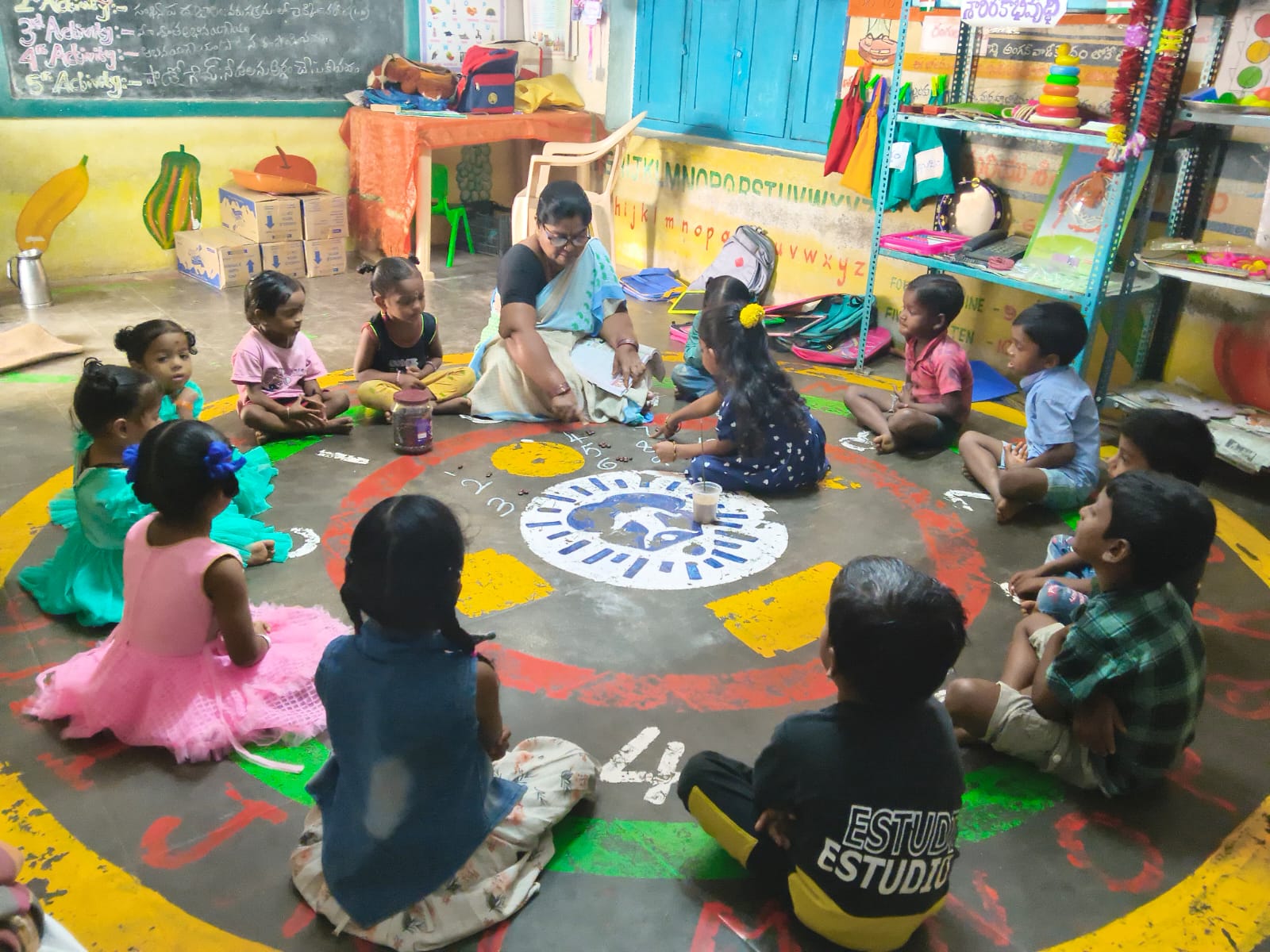
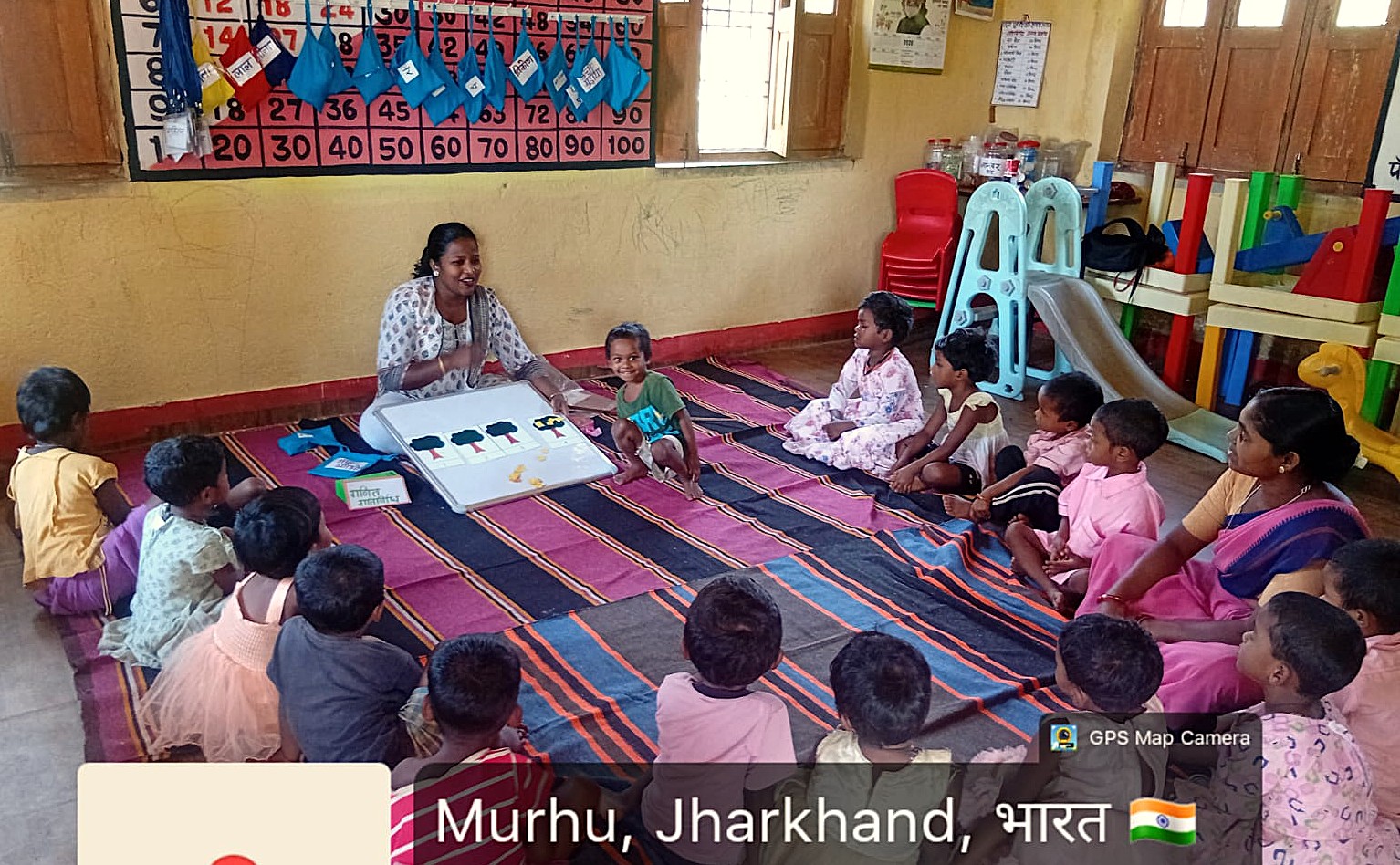
School readiness isn’t about textbooks. It’s about helping children feel comfortable learning, speaking, playing, sharing, and asking questions. Through songs, stories, sorting games, role-play, and physical activities, children build cognitive, motor, and social skills – one small interaction at a time.
Handmade Teaching Learning Materials
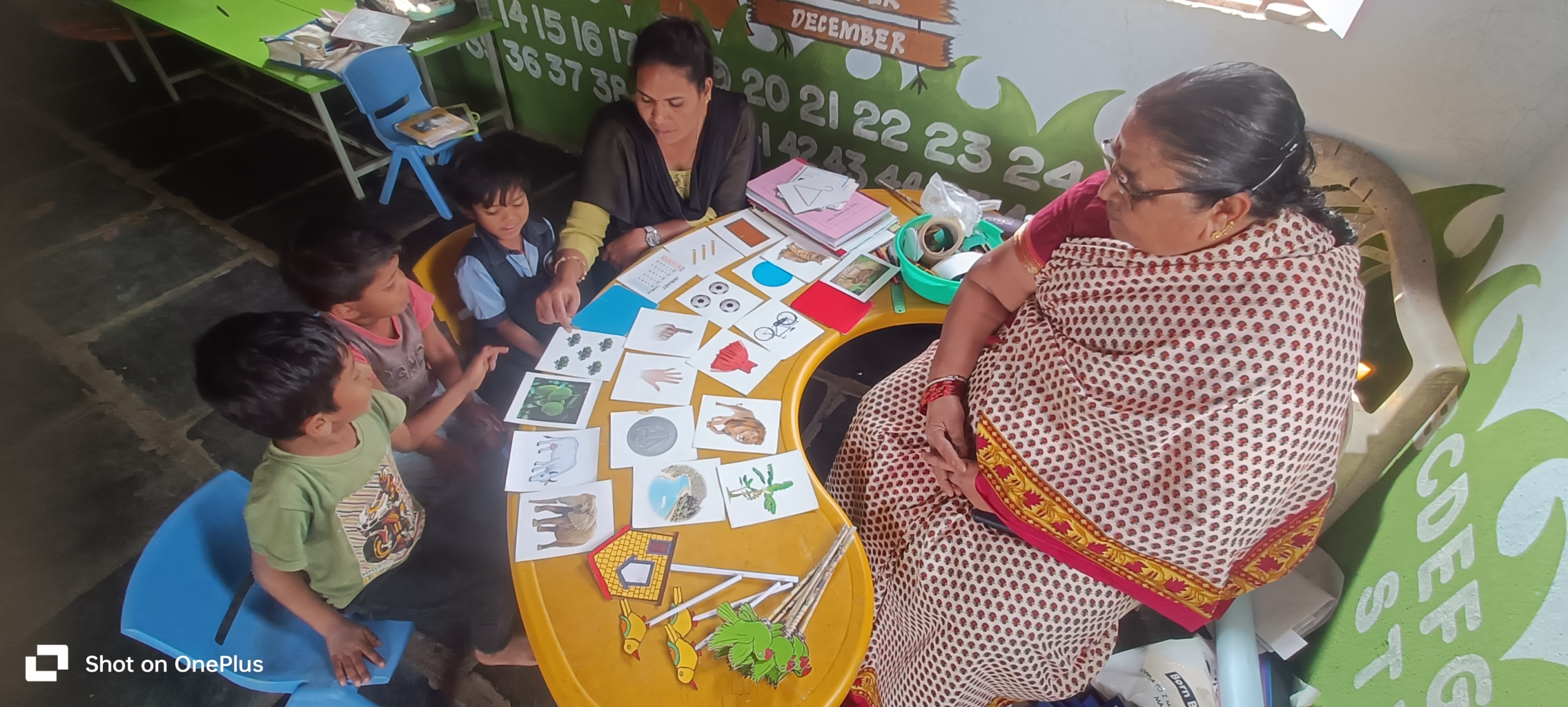
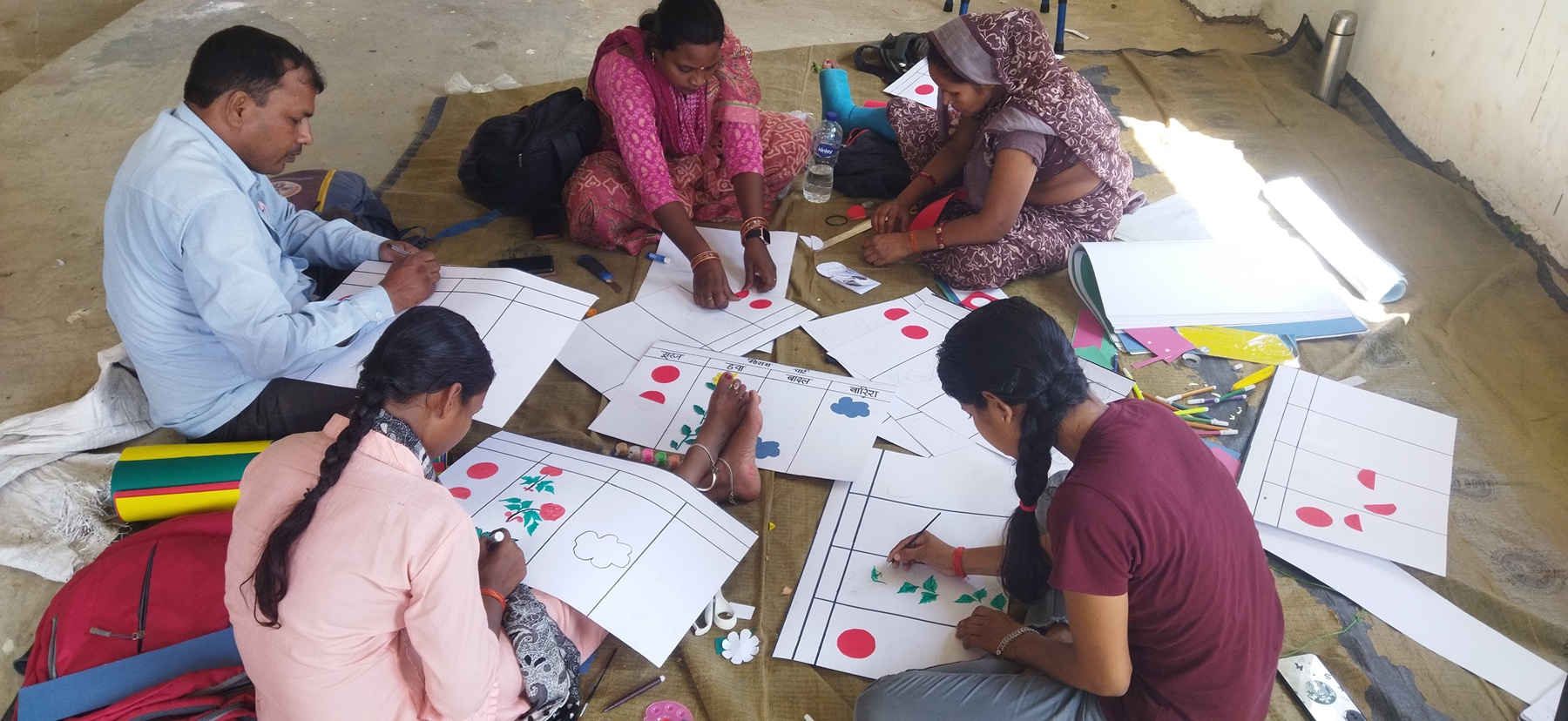
Anganwadi teachers create TLMs from everyday materials – cardboard, colour papers, fabric scraps, seeds, sticks, and bottle caps. A counting activity uses tamarind seeds; a colour lesson comes from pieces of cloth. Learning becomes familiar, relatable, and deeply interactive.
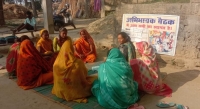
Mothers’ committees & community ownership
A mother is a child’s first teacher. When her understanding guides the Anganwadi, it becomes a place children feel safe in. Active mothers’ committees monitor quality, support daily routines, and ensure the centre is a community asset – owned, valued, and sustained.
Anganwadi worker training
Intensive training on child-friendly teaching methods aligned with the state syllabus. Workers learn not just what to teach, but how children learn – through observation, adaptation, and purposeful play.
From a quiet room to a vibrant learning space
Here’s how ILP strengthens an Anganwadi centre – working within the government system, not outside it.
Centre assessment & community mobilisation
ILP identifies Anganwadi centres with low attendance, limited structured activity, and weak community engagement. Community meetings are held with parents, ICDS officials, and local leaders to build awareness and secure commitment. ILP NGO partners + ICDS officials + community
Worker training & TLM distribution
Anganwadi workers and helpers receive hands-on training in Pre-School Education methods – activity-based learning, structured daily routines, using songs, stories, and games. Each centre receives a ₹25,000 TLM kit with play materials, charts, flash cards, and age-appropriate learning aids. ILP ECE facilitators + Anganwadi workers
Daily structured learning – at least 2 hours
Each day, children participate in structured, play-based activities for at least two hours. They learn counting through beads and stones, identify fruits and animals through picture cards, build hand control through stacking and colouring, and develop balance and coordination through physical games. Anganwadi worker + children
Mothers’ committee activation
Mothers’ committees are formed and trained to actively monitor attendance, support nutrition and hygiene, and champion the centre’s quality. Some mothers help create TLMs. Over time, the committee takes ownership of the centre. ILP NGO partners + mothers + community
Assessment & school-readiness tracking
Centres are assessed twice a year using the Preschool Curriculum Framework and the Vidya Pravesh module. ILP tracks attendance, TLM usage, worker engagement, and children’s developmental milestones. The goal: every child enters Grade 1 ready to learn. ILP ECE facilitators + ICDS supervisors
School-ready children, empowered communities
Cumulative impact of ILP’s Early Childhood Education program
Sometimes, the most effective learning tools are not the most advanced – but the most thoughtful. In Anganwadis, creativity begins with what’s already around them. Ice-cream sticks, chart paper, bottle lids, old clothes, sticks, local materials, and a little imagination become tools for joyful learning.
From ILP’s Anganwadi program · with NGO partner SNEHA
Gallery
Give a child the strongest possible start
₹25,000 equips one Anganwadi centre with a complete Teaching Learning Materials kit