Helping students discover, explore, and build pathways to productive futures
Most students in government schools are first-generation learners. They don’t lack ambition — they lack exposure, guidance, and a structured way to think about their future. India Literacy Project’s career guidance programs change that. Career guidance isn’t about pushing students toward a “right” profession. It’s about helping them understand themselves first — and then equipping them with the information, tools, and support to make their own informed decisions.
Who am I? What’s out there?
Helping students understand who they are through guided self-discovery, and opening their eyes to the full landscape of career options — not just the ones they’ve heard of.
Self-discovery Worksheets, personality assessments, and guided reflection help students understand their interests, strengths, and values — before thinking about careers. Career awareness Classroom sessions, exposure visits, career melas, and ILP’s career chart introduce students to 100+ career options across streams — from engineering and medicine to design, agriculture technology, and skilled trades. Key outcomes ✓ Students exposed to 100+ career options for the first time ✓ Self-awareness of strengths, interests, and values through personality tests ✓ Each student begins their personal Career PlannerFrom awareness to action
Structured career counselling with path planning after 10th and 12th exams, complemented by life skills training and spoken English that equip students for the world beyond school.
Career guidance Group and 1-on-1 career guidance sessions for students in Grades 9-12, with psychometric testing, career chart exposure, and structured path planning using ILP’s career planner workbook. Life skills & spoken English Communication, teamwork, problem-solving, financial literacy, and functional English — practical capabilities that school curricula don’t cover but employers and colleges value.For students who need additional support, ILP also provides scholarships for deserving students from rural and disadvantaged backgrounds to pursue higher education, and connects them with mentors — alumni and industry professionals who serve as role models.
Key outcomes ✓ Every student receives personalised 1-on-1 guidance after 10th ✓ Students build employability and life skills ✓ Stream selection based on evidence, not guesswork ✓ Scholarships and mentoring for students who need ongoing supportWhy a 2-year program?
Coming up with an original thought about your own future takes time
One-time career counselling sessions or single psychometric tests give students answers — but not their own answers. ILP’s program is deliberately spread over two years because self-discovery can’t be rushed. A student’s first thought about their career is almost always someone else’s idea — a parent’s expectation, a peer’s ambition, a teacher’s suggestion. It’s only by reflecting over time, exploring widely, and revisiting their own interests that students arrive at choices that are truly theirs.
The program starts in Grade 9, giving students a full year of self-discovery before they face the critical decision point after 10th standard. By the time results arrive, students already know who they are, what interests them, and what their options look like — so the decision isn’t a crisis, it’s a next step.
Scaling with government partnerships
ILP has signed an MOU with the Government of Karnataka to roll out career guidance across 2,500 government schools reaching 400,000 students. This partnership integrates ILP’s career chart, career planner, and teacher training into the state school system.
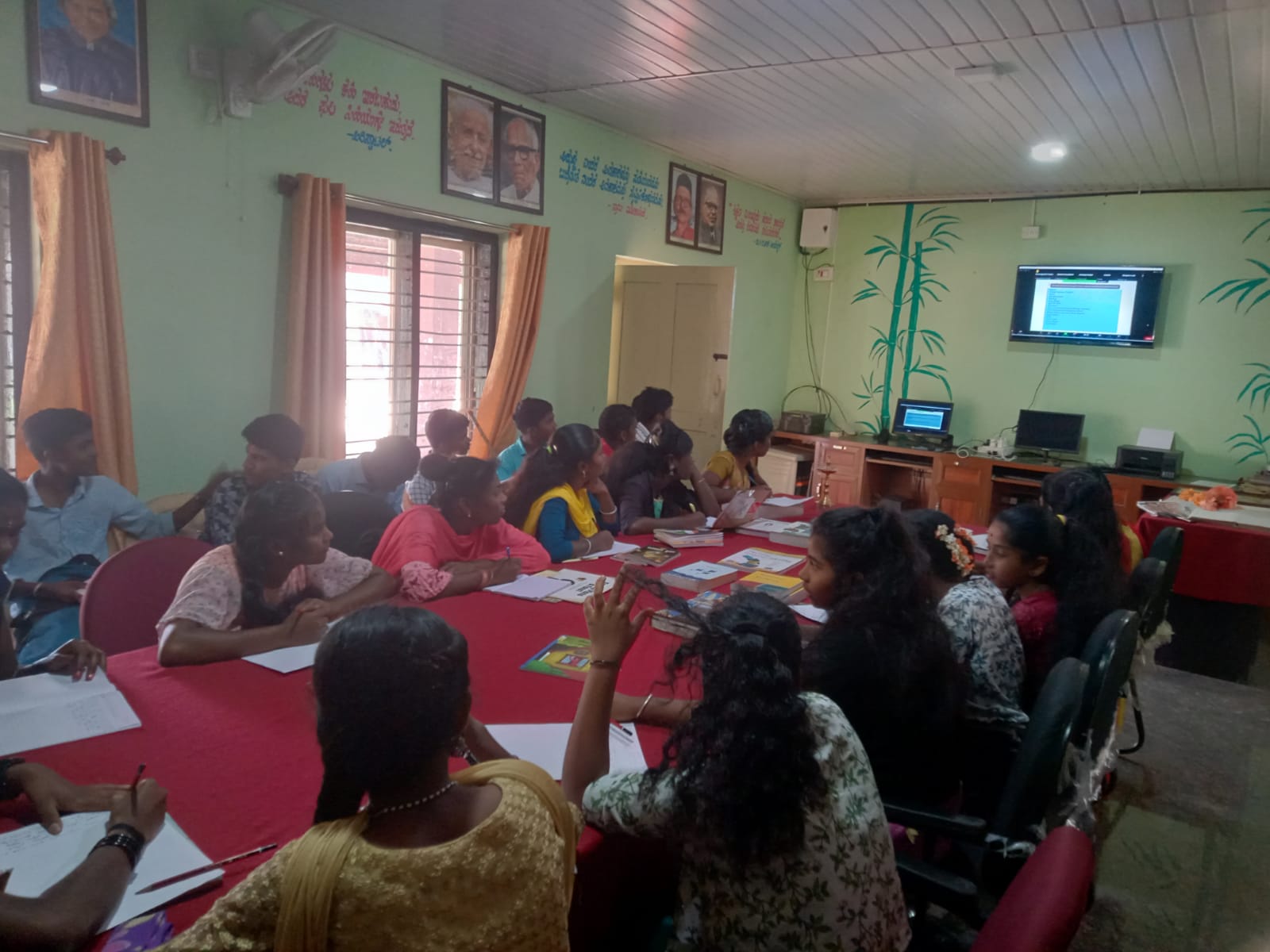
Career Mela · Belgavi, Karnataka
When career guidance comes from school alumni
At Government High School, Belgavi, the most powerful lesson didn’t come from a textbook. It came from seeing what’s possible when former students returned as professionals — a nurse, a police constable, a bank clerk, an engineer — and shared their journeys with current students. ILP helped the school host this alumni-led career mela, making career options feel real and achievable.
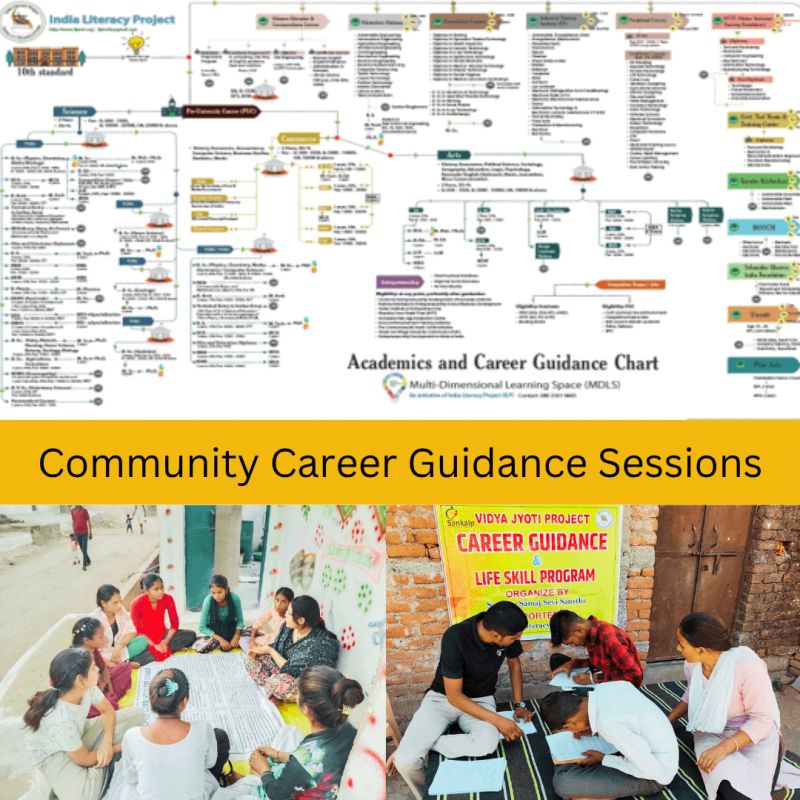
Community career guidance – Madhya Pradesh
From limited career awareness to informed career choices
In villages across Madhya Pradesh — Kiratpura, Rampur, Bond, Achatt, and Nayagaon — conversations about education and future careers are beginning to change. Parents who once said they didn’t know what options existed are now engaging in career discussions alongside their children.
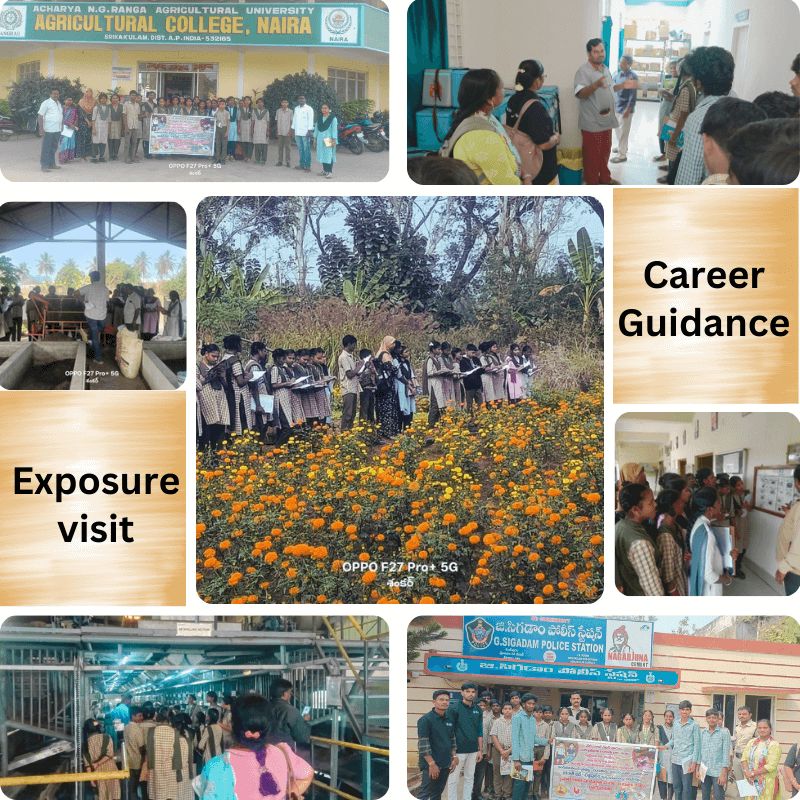
Exposure visits – Bejjipuram, AP
From “what can I become?” to “how can I become?”
Through ILP’s partnership with Youth Club – Bejjipuram Balavikas, students stepped out of the classroom into the real world. Exposure visits to hospitals, banks, police stations, and farms turned abstract career names into lived experiences.
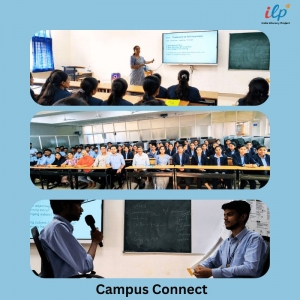
Campus Connect – Davangere
Career readiness doesn’t happen by chance
At Davangere University, ILP hosted Campus Connect — a full-day programme for M.Sc and MCA students that began with a simple question: why wait until graduation to prepare for the real world? The programme connected students with career planning, interview skills, and industry exposure.