Reimagining classrooms where every child learns with curiosity and confidence
Learning cannot improve with textbooks alone. Children learn best when they read, experiment, explore, build, question, and create. ILP’s long-term goal is to transform government schools into engaging learning spaces where children become confident, inquisitive, and value-aware. Multi Dimensional Learning Spaces (MDLS) is ILP’s flagship framework: equal importance to all aspects of the curriculum, learning that involves visual, auditory, and experiential methods – and does not stop at school.
Early Foundations
Building the foundation through play
Transform Anganwadi centres into vibrant, play-based learning spaces that prepare children for primary school – discipline, hygiene, confidence, and basic literacy.
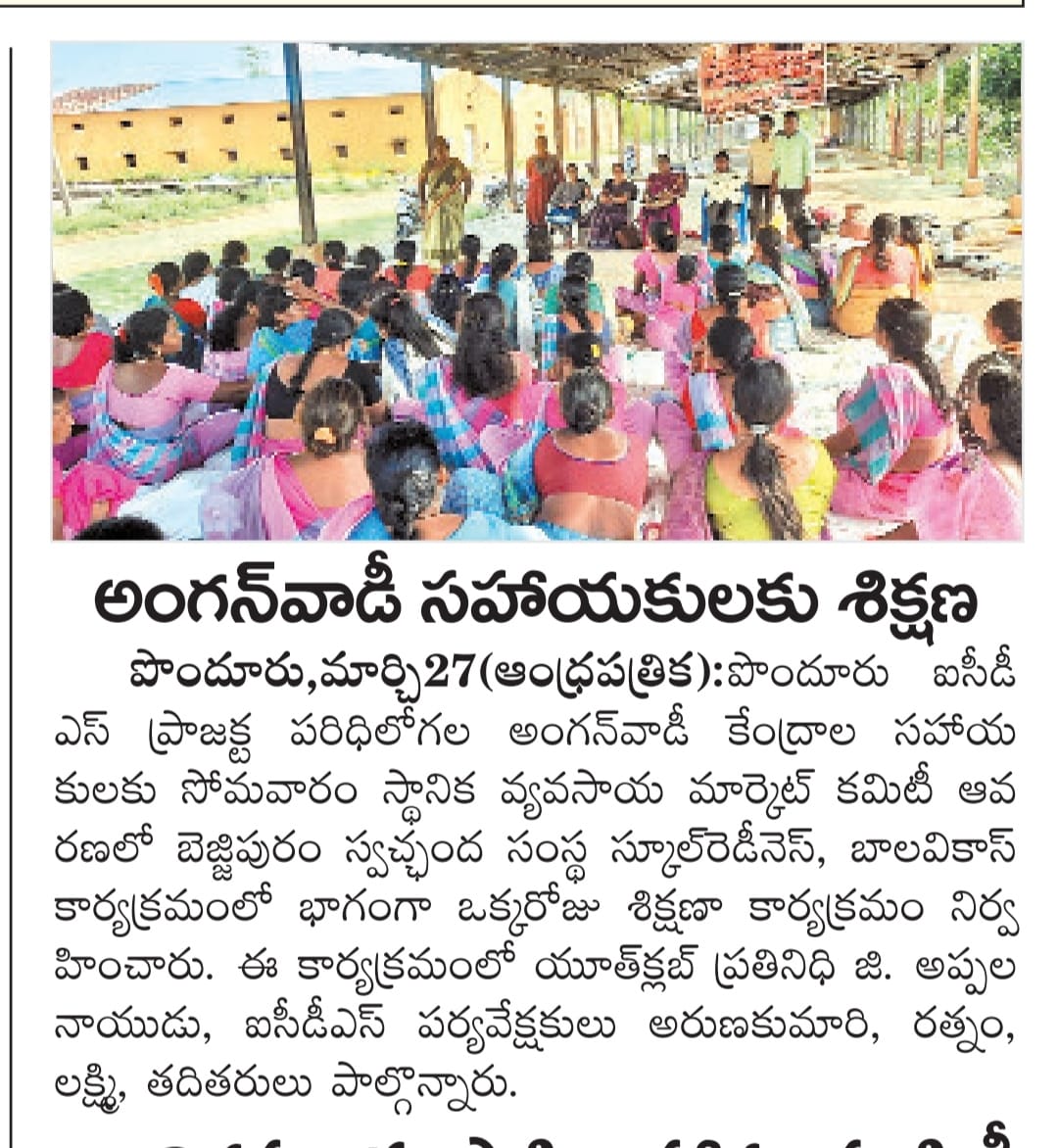 Anganwadi Worker TrainingIntensive training on child-friendly teaching methods, activity-based learning, and play-based routines. Mothers’ committees actively monitor and support preschool quality.
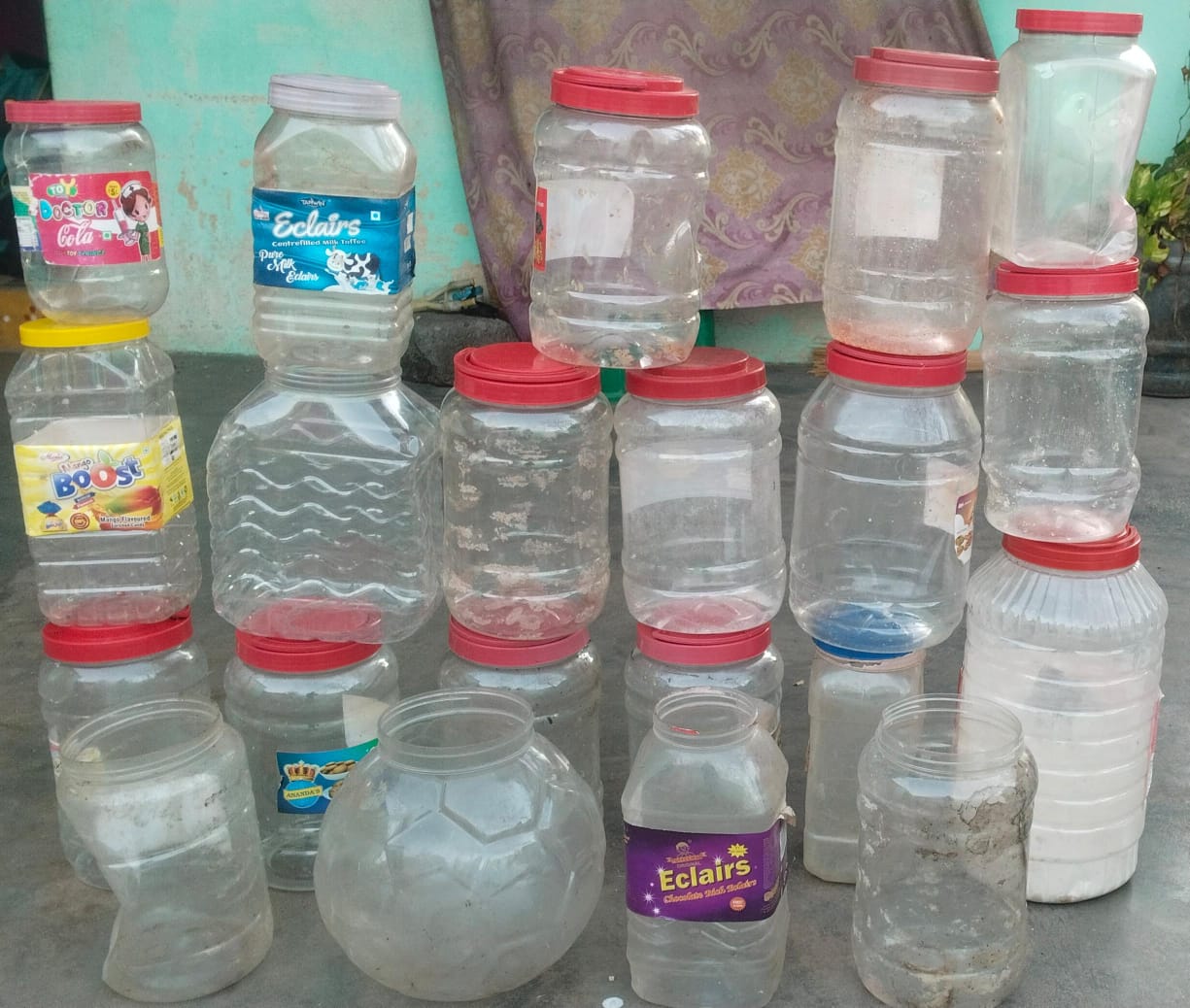 Teaching-Learning MaterialsTLM kits distributed to Anganwadis – engaging play materials created using locally available resources. 500 centres strengthened in Tamil Nadu alone.
Key outcomes+ Children gain school-readiness in discipline, hygiene, and confidence+ Smooth transition from Anganwadi to primary school+ Community ownership of preschool quality
Teaching-Learning MaterialsTLM kits distributed to Anganwadis – engaging play materials created using locally available resources. 500 centres strengthened in Tamil Nadu alone.
Key outcomes+ Children gain school-readiness in discipline, hygiene, and confidence+ Smooth transition from Anganwadi to primary school+ Community ownership of preschool quality
Read & Explore
Strong roots in reading, language & math
Ensure every child achieves foundational literacy and numeracy – the building blocks for all future learning.
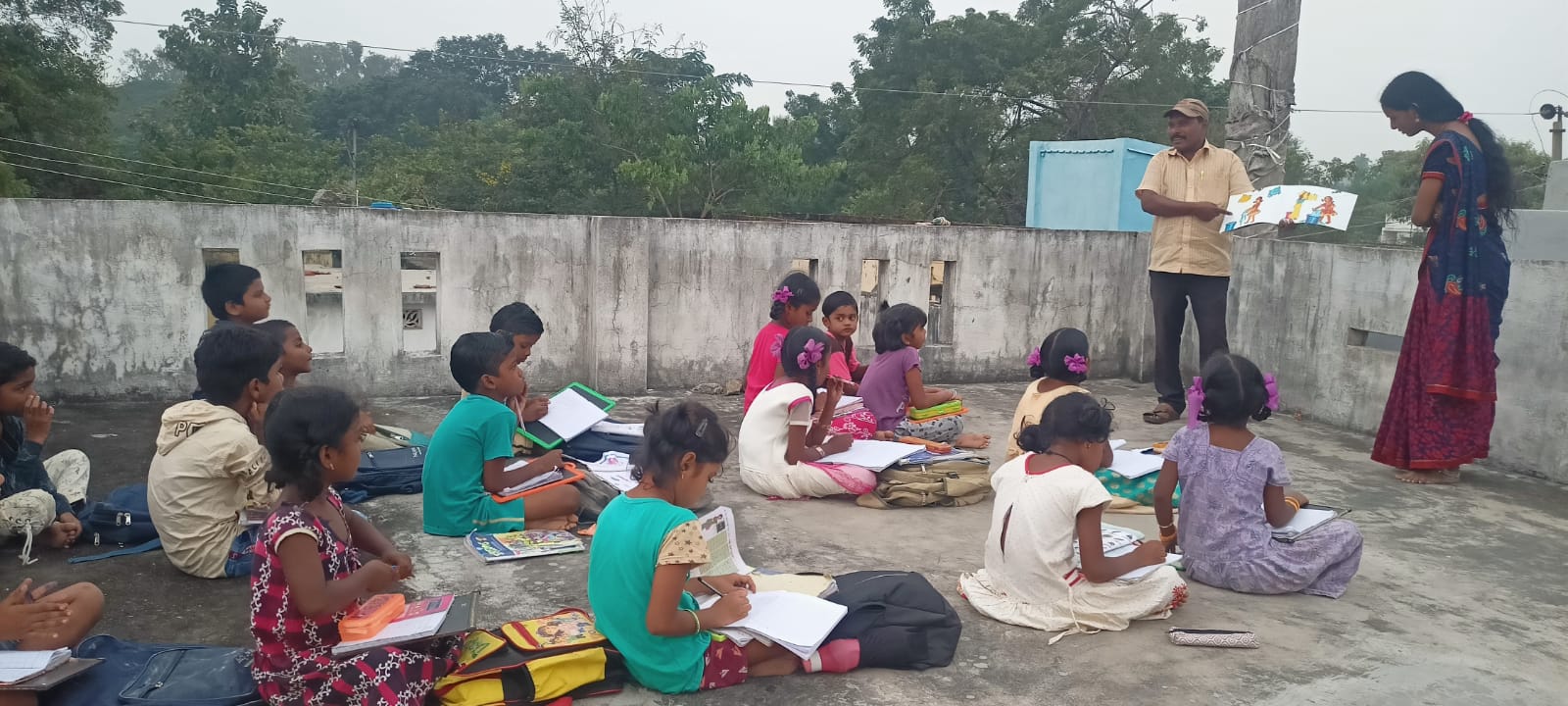 Village Learning CentersCommunity-based centres run by Vidya Saathis support 20-35 children each in reading, language, and math – using the Teaching at the Right Level approach. 980+ Vidya Saathis across 900+ villages.
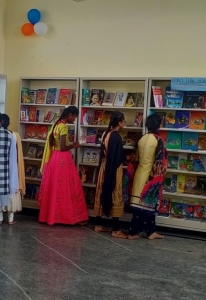 Child-Friendly LibrariesBilingual libraries with books colour-coded by reading level (GROWBY methodology). Structured reading programmes with dedicated library periods and student storytelling.
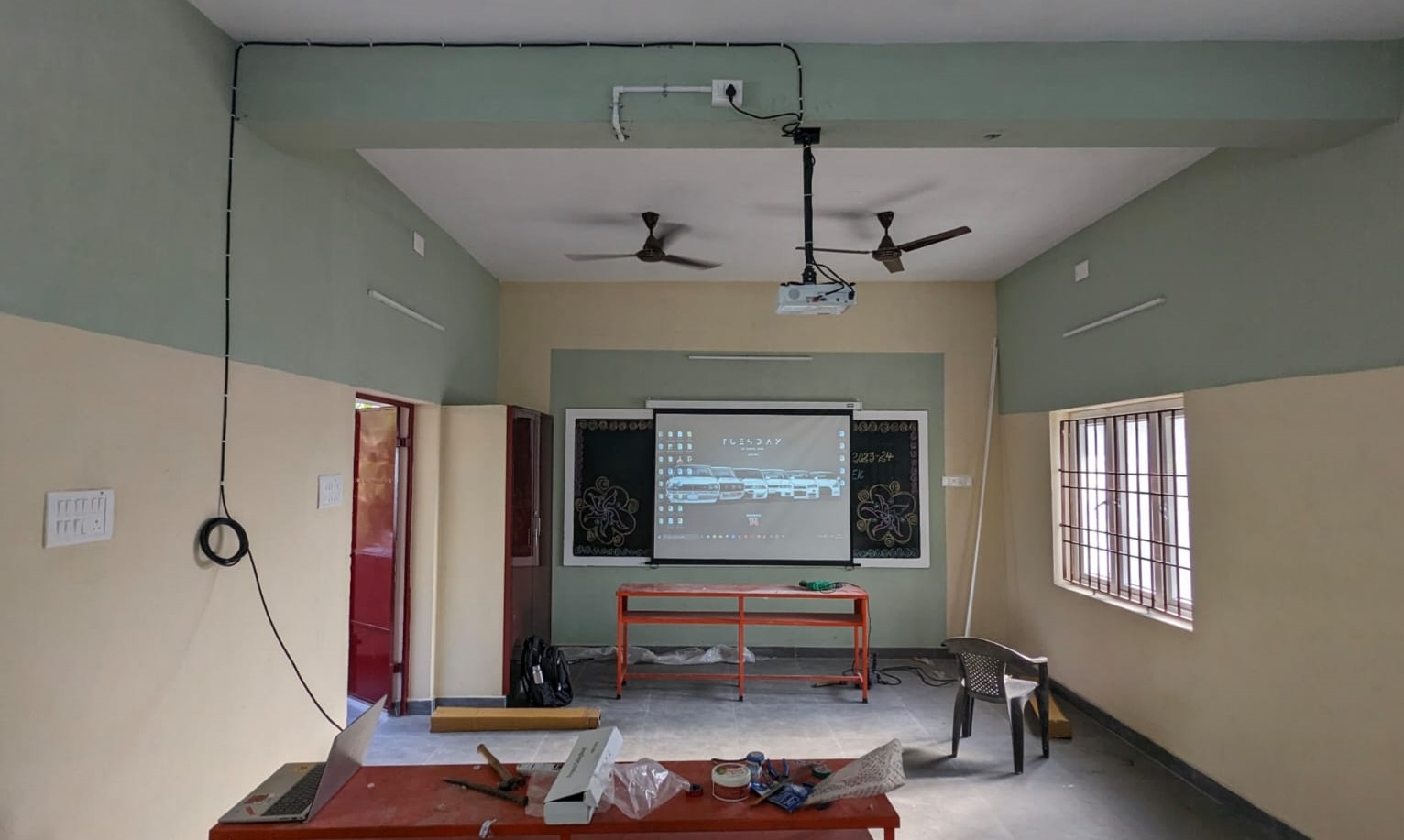 Smart ClassroomsNCERT-aligned digital content in 7 Indian languages – animated lessons, interactive exercises. Content on the Diksha national portal. Teachers bring classroom alive through audio/video content.
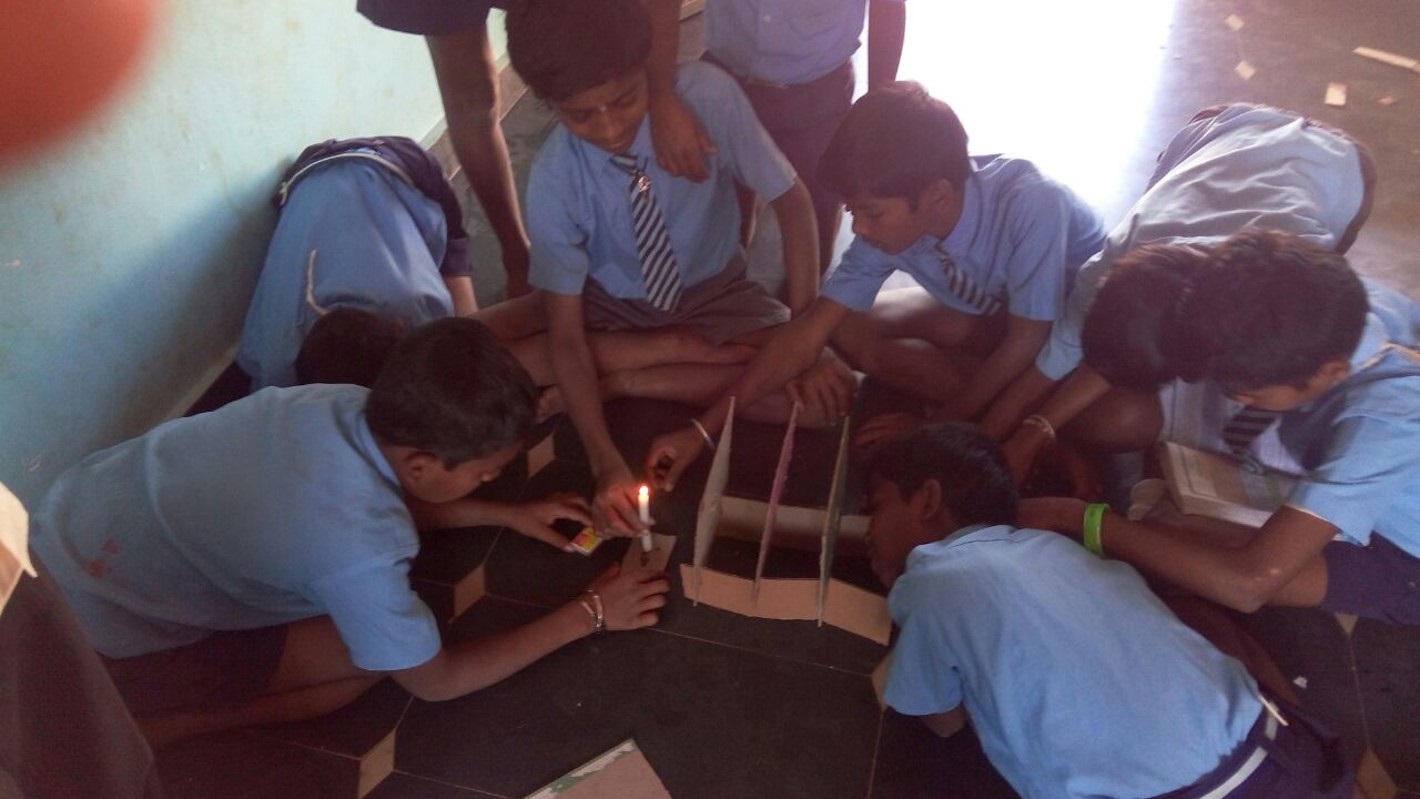 Hands-on ScienceLab-in-a-Box science kit with 200+ experiments across Physics, Chemistry, Biology. NCERT-aligned for Grades 5-10 with detailed manuals, demo videos, and structured teacher training.
Key outcomes+ Children achieve grade-appropriate reading and math skills+ Science moves from textbook to hands-on understanding+ Teachers using learning innovations in classrooms.
Hands-on ScienceLab-in-a-Box science kit with 200+ experiments across Physics, Chemistry, Biology. NCERT-aligned for Grades 5-10 with detailed manuals, demo videos, and structured teacher training.
Key outcomes+ Children achieve grade-appropriate reading and math skills+ Science moves from textbook to hands-on understanding+ Teachers using learning innovations in classrooms.
Build & Experiment
Experiment, build, and explore
Deepen learning through experiential science, electronics, and digital tools – building scientific temper and practical skills.
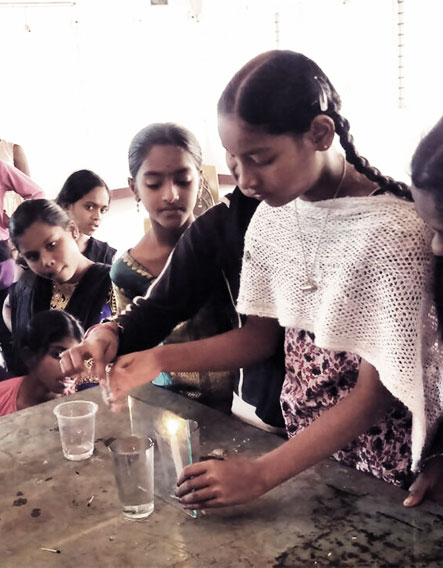 Hands-on Science Kits200+ experiments continue through upper primary, with students now designing their own projects for annual science fairs – presenting, explaining, and building confidence.
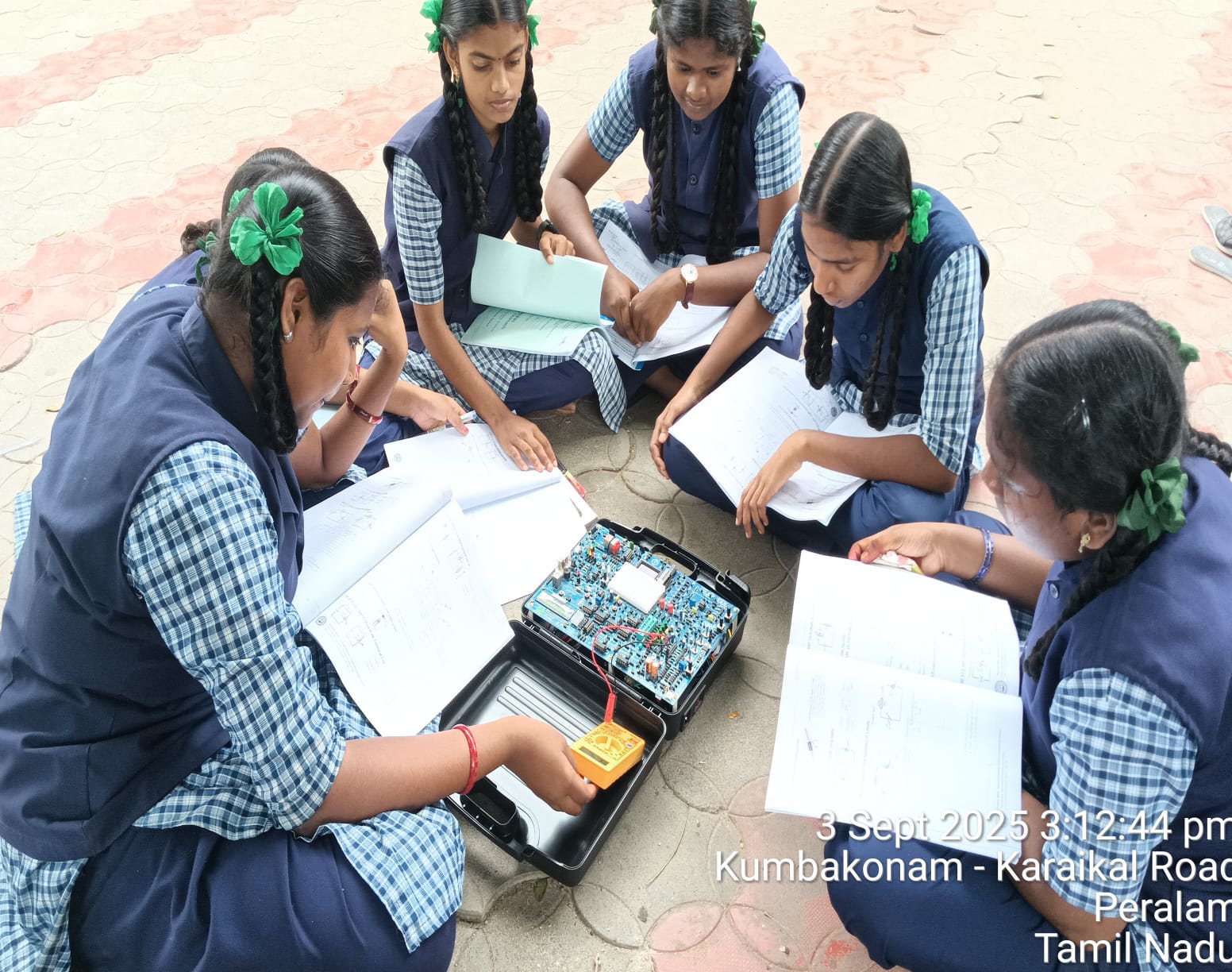 Hands-on ElectronicsElectronics kits developed with IIT Madras. Students build circuits, connect sensors, and create working models – renewable energy, smart systems, biomedical innovations.
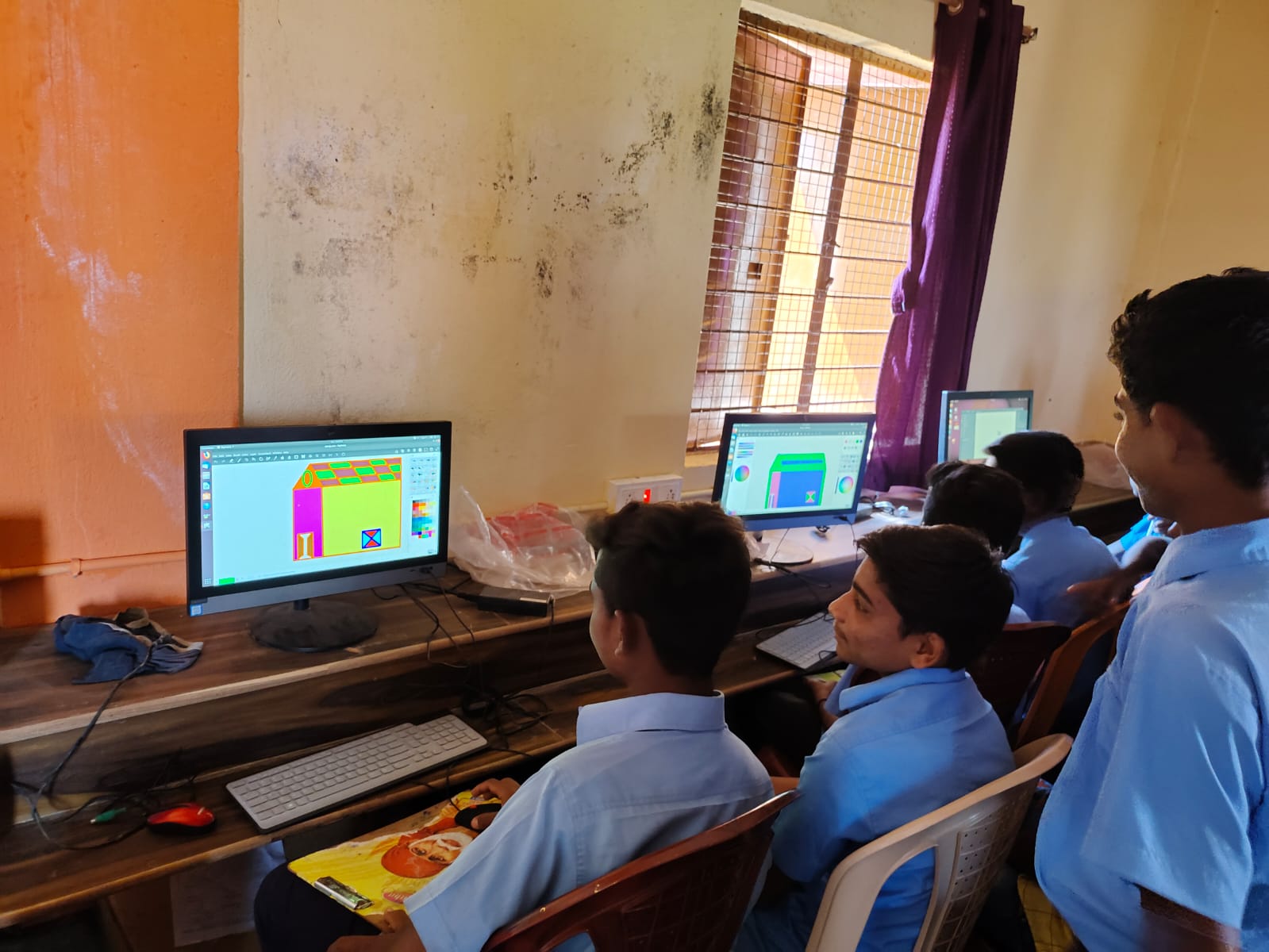 ICT & Digital Literacy26 open-source software tools mapped to NCERT curriculum – GeoGebra, PhET simulations, Scratch coding, GIMP. Self-paced video modules with facilitator support.Smart ClassroomsDigital content deepens as subjects get more complex. Animated cell division, planetary motion, chemical reactions – concepts hard to teach with chalk alone come alive on screen.
Key outcomes+ Students develop scientific temper and practical skills+ Digital confidence on par with private school peers+ First experience building and presenting something on their own
ICT & Digital Literacy26 open-source software tools mapped to NCERT curriculum – GeoGebra, PhET simulations, Scratch coding, GIMP. Self-paced video modules with facilitator support.Smart ClassroomsDigital content deepens as subjects get more complex. Animated cell division, planetary motion, chemical reactions – concepts hard to teach with chalk alone come alive on screen.
Key outcomes+ Students develop scientific temper and practical skills+ Digital confidence on par with private school peers+ First experience building and presenting something on their own
Apply & Prepare
Apply, create, and prepare for the future
In secondary school, learning programmes combine with career guidance to help students see pathways ahead – from science fairs to college entrance preparation.
Advanced Science & ElectronicsStudents take on complex projects for district-level science fairs with IIT Madras recognition. Electronics projects cover AI, IoT, and automation. Nearly 100 schools hosted science fairs for the first time.ICT & Future-ready SkillsTN SPARK programme brings AI, robotics, coding, and IoT to 340 schools. Students learn to code in Scratch, edit video, and work with digital tools – skills that open doors beyond school.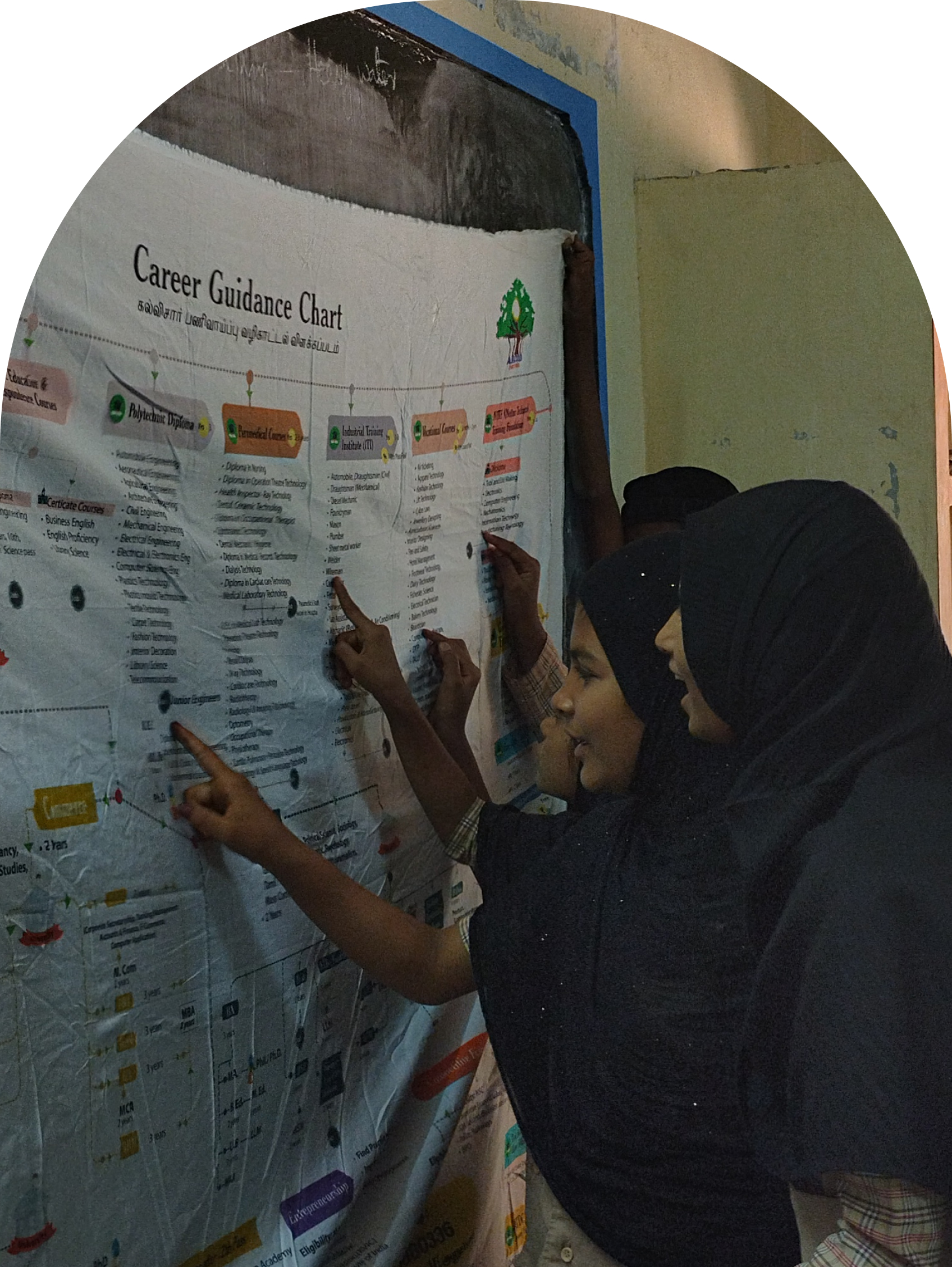 Transition to EarningIn parallel, ILP’s career guidance program begins – self-discovery, career awareness, psychometric testing, and path planning for life after school.
Key outcomes+ Students compete and present at district and state level+ Exposure to AI, robotics, coding alongside academic curriculum+ Smooth transition from learning to career planning
Transition to EarningIn parallel, ILP’s career guidance program begins – self-discovery, career awareness, psychometric testing, and path planning for life after school.
Key outcomes+ Students compete and present at district and state level+ Exposure to AI, robotics, coding alongside academic curriculum+ Smooth transition from learning to career planning
Impact at a glance
At every stage, teachers lead the way
Every ILP program starts with the teacher. We train teachers to use our tools and methods, gather their feedback continuously, and help them operationalise each program in their own classroom context. When teachers are equipped and confident, the entire school transforms.