Child-Friendly Libraries
In 210 schools across Karnataka’s Chitradurga district, Library Day wasn’t just a celebration — it was a reminder of how magical a book can be in a child’s hands. Under the Karnataka Model School Pathways Programme supported by JSW Foundation, ILP’s Child-Friendly Library initiative has been phased over three years: Year 1 focused on access and habit-building. Year 2 moved from exposure to engagement. By Year 3, the emphasis shifts to ownership — embedding these practices within schools so that teachers can independently sustain them.
Most government schools have textbooks. Very few have books children actually want to read.
India’s government schools serve over 110 million children, yet most lack functional libraries. Where libraries exist, books are often locked away, age-inappropriate, or available in only one language. Without access to graded, engaging reading material, children struggle to build fluency beyond what the textbook offers.
Reading proficiency is the foundation of all other learning — science, social studies, even mathematics depend on the ability to read and comprehend.
A structured reading programme, not just a bookshelf
ILP’s Child-Friendly Libraries are bilingual, classroom-based reading spaces designed to build reading fluency from picture-book to chapter-book stage. Each library is stocked with carefully curated, age-appropriate books colour-coded by reading level using the Hippocampus GROWBY system.
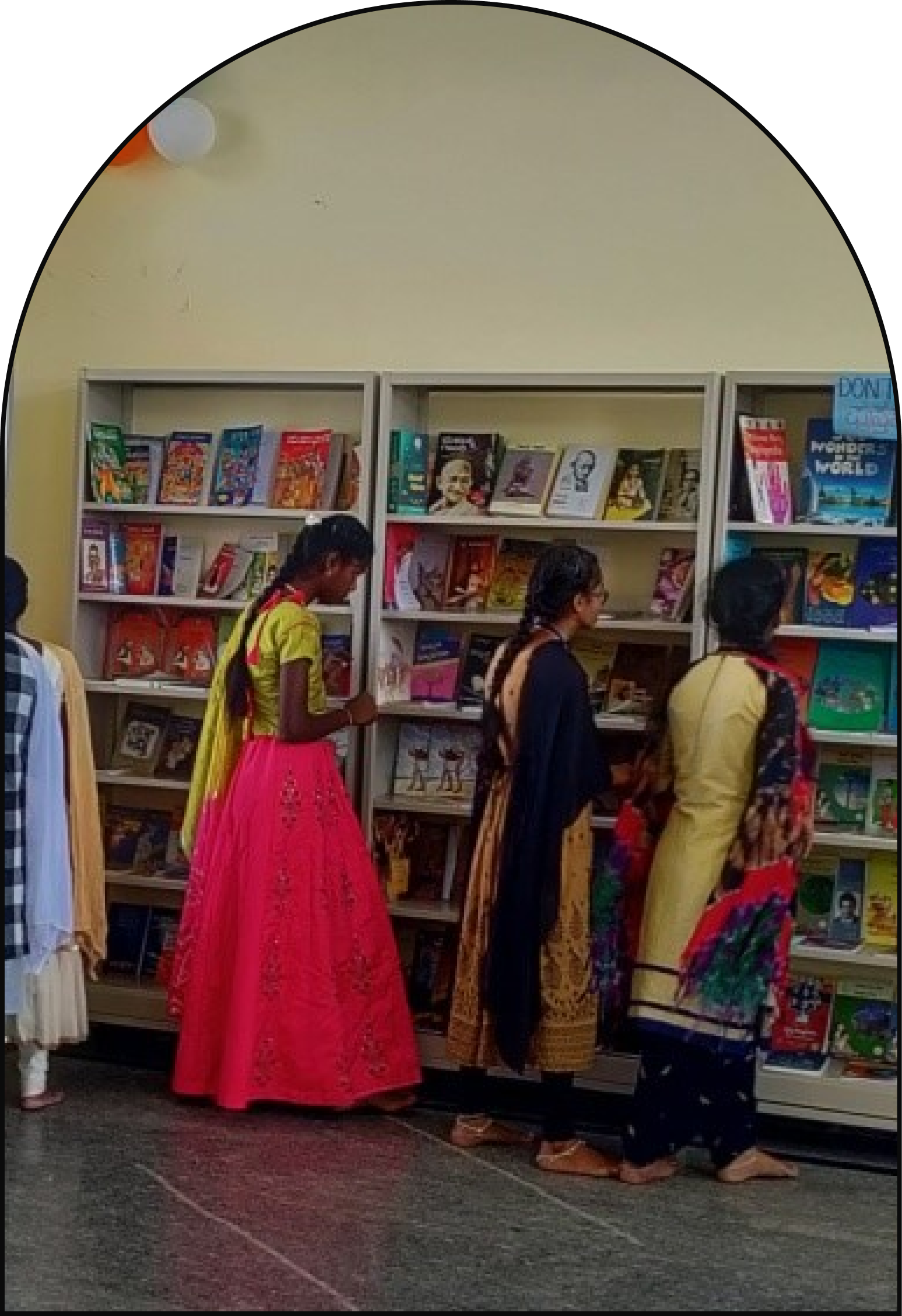
Libraries are set up in existing classrooms — no separate room needed. Books are displayed face-out on open shelves at child height, not locked in cupboards.
Bilingual & graded books
Books in the local language and English, colour-coded into reading levels so children progress at their own pace — from wordless picture books to full-length stories.
Structured reading time
Dedicated weekly library periods with a mix of silent reading, teacher read-alouds, peer reading, and student storytelling. Not free time — purposeful reading practice.
Reading level tracking
Each child’s level is assessed and tracked. Teachers use the GROWBY colour system to guide students to appropriate books and measure growth over time.
Open, inviting spaces
Books displayed face-out at child height on open shelves. Classrooms rearranged for group reading with mats and cushions. The library is part of the classroom, not separate from it.
From setup to sustained reading habit
Here’s how ILP brings a library to life in a government school — and keeps it running.
School selection & needs assessment
ILP works with district education officials and school heads to identify schools with no library or non-functional library. The existing reading levels of students are assessed using baseline tests.
Library setup & book curation
Open shelves are installed in existing classrooms. Books are curated in the local language and English, colour-coded by reading level (Hippocampus GROWBY). The space is designed to be inviting — face-out displays, reading mats, and posters.
Teacher training
Teachers are trained on the structured reading programme: how to conduct read-alouds, guide peer reading, facilitate storytelling sessions, assess reading levels, and track student progress.
Weekly library sessions
Each class gets dedicated library periods every week. Sessions include a mix of teacher read-aloud, silent individual reading, peer reading in pairs, and student storytelling where children retell stories in their own words.
Assessment & ongoing support
Reading levels are assessed periodically using ASER methodology and the GROWBY framework. ILP provides ongoing classroom support visits, refresher training, and adds new books as children advance. The goal is for the school to run the library independently within 2–3 years.
Measurable improvement in reading outcomes
Results across ILP library programmes in Karnataka, Jharkhand, and Tamil Nadu
reading levels
government schools
reading programmes
Sustainable change in education rarely comes from one-off interventions. It emerges when intent is backed by continuity, learning, and course correction. The Child Friendly Library initiative offers an important insight: impact compounds when programs are phased, not rushed.
Adopted by government at scale
ILP’s library model has been adopted through partnerships with state governments. In Karnataka, the Karnataka Model School Pathways Programme supported by JSW Foundation spans 100+ schools in Chitradurga district, strengthening foundational literacy through phased library deployment. Separately, libraries are established across 5 districts as part of the Model Schools initiative reaching 55,000 students. In Tamil Nadu, the STEM Library Project with Pratham Books is establishing STEM libraries across government schools.
Gallery
[Photo gallery — children reading in libraries across Karnataka, Tamil Nadu, and Jharkhand]
Help a school discover the joy of reading
Rs. 15,000 equips one school with a complete child-friendly library