Career Guidance & Pathways
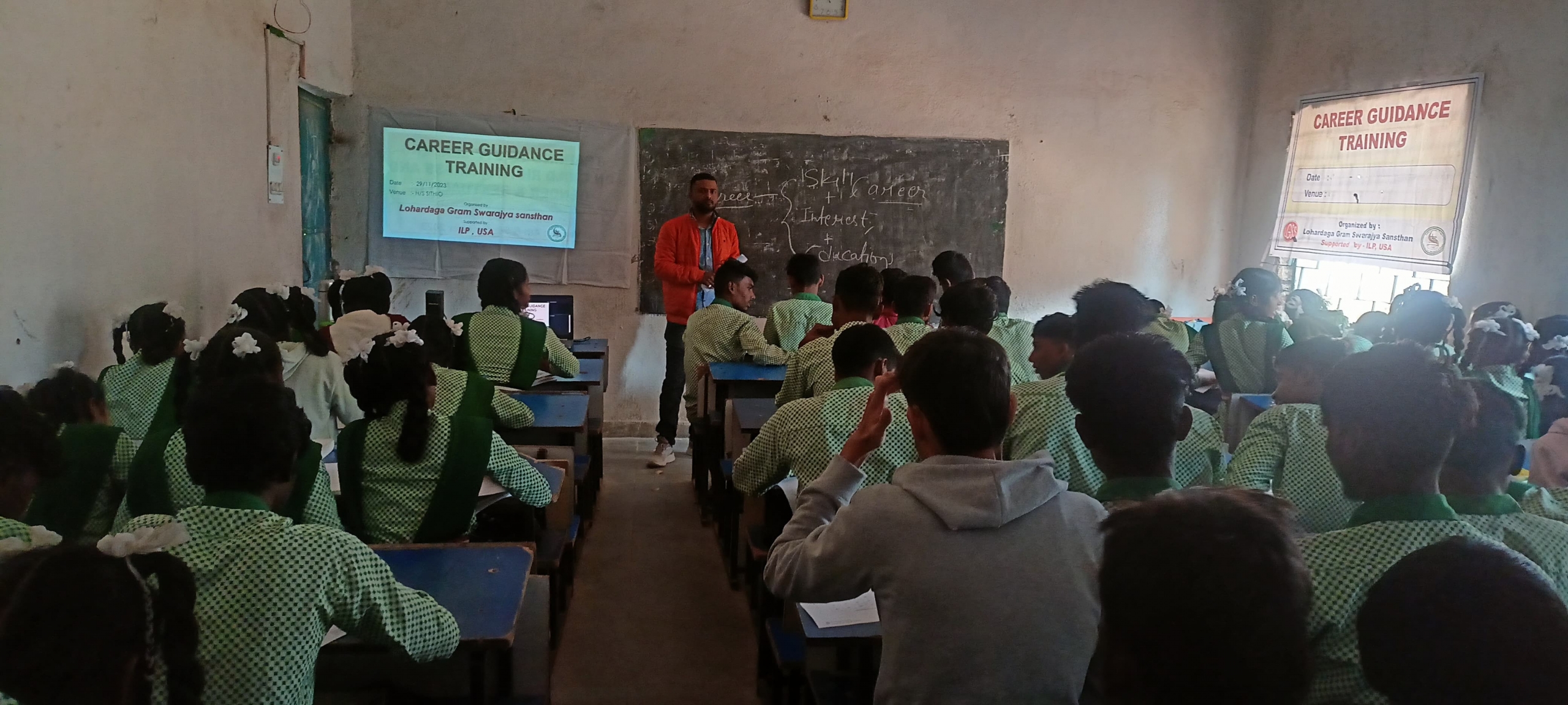
At a Government High School in Belagavi, Karnataka, the most powerful lesson of the day didn’t come from a textbook — it came from watching former students, now a nurse, a police constable, a bank clerk, an engineer, return to talk about the journey from these same benches to a career. India Literacy Project (ILP) helped the school host this Career Mela. It’s one of thousands of sessions ILP runs each year in eight states, across 4,000+ schools from Tamil Nadu to Jharkhand — and for many students, it’s the first time a career felt real, not a name on a chart, but a story from someone just like them.
We expect students to make one of the most important decisions of their life with too many unknowns
Only about 1 in 10 Indian students ever gets professional career guidance, and 40% never speak to a career counsellor at all. Now imagine facing that gap as a first-generation learner in a government school — with no one at home who has navigated this path before, and the pressure to decide right after 10th standard. This isn’t confined to one state or one kind of community: it shows up in Karnataka’s rural divisions, in Tamil Nadu’s government high schools, in Telangana’s tribal districts, and in remote village schools across Jharkhand alike.
In Karnataka’s Belagavi, Kalaburagi, and Mysuru divisions, for instance, only 10-12% of adults have been educated beyond 12th standard, and secondary dropout rates run 12-24%. These students don’t lack ability or ambition — they lack a structured way to think about their future. Career guidance in government schools is almost entirely absent. ILP’s program fills that gap, wherever it operates.
A structured 2-year journey, not a one-time session
ILP’s Career Guidance program is built on a simple but uncommon principle: career decisions should come from the student, not from a test or a counsellor. The program starts in Grade 9 — a full year before the critical 10th-standard decision — giving students time to reflect, explore, and arrive at choices that are genuinely their own. In Grade 9, the focus is entirely on self-discovery: who am I? What are my interests, strengths, and values? In Grade 10, the focus shifts outward: what options are available, and how do I get there?
This isn’t a program that replaces the teacher — it equips the teacher. Select teachers in each school are trained as career counsellors and facilitate monthly structured sessions using ILP’s tools and workbooks. Parents are brought into specific workshops because career decisions in these communities are family decisions. The same model runs, with local adaptation, across all 8 states where ILP works — and doesn’t end at 10th: tracking and counselling continue through 12th standard.
Self-discovery first
Students use structured worksheets and the Holland Code (RIASEC) framework to identify their personality type, interests, and strengths — making self-understanding visible and actionable rather than abstract.
100+ career paths explored
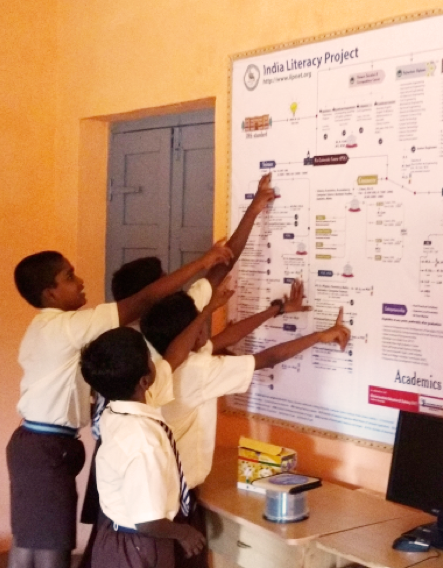
Through career charts, planners, a dedicated website, mobile app, and WhatsApp chatbot, students explore a wide range of career options with clear information on entry requirements, courses, and progression.
Top 3, not top 1
Students identify three career options rather than committing to one. For each option, they map what success requires and what might make them miss it — building resilience into their plan.
Teachers as career counsellors
Designated teachers are trained to facilitate the full program — from self-discovery workshops to 1:1 post-results counselling. Monthly online support sessions keep teachers equipped and connected.
The program in practice
School onboarding & teacher selection
ILP works with district and state education officials to identify schools. In each school, 1-2 teachers are selected and trained as career counsellors. Schools receive career charts (displayed prominently in classrooms), career planners, and self-discovery workbooks.
Grade 9 — Self-discovery year
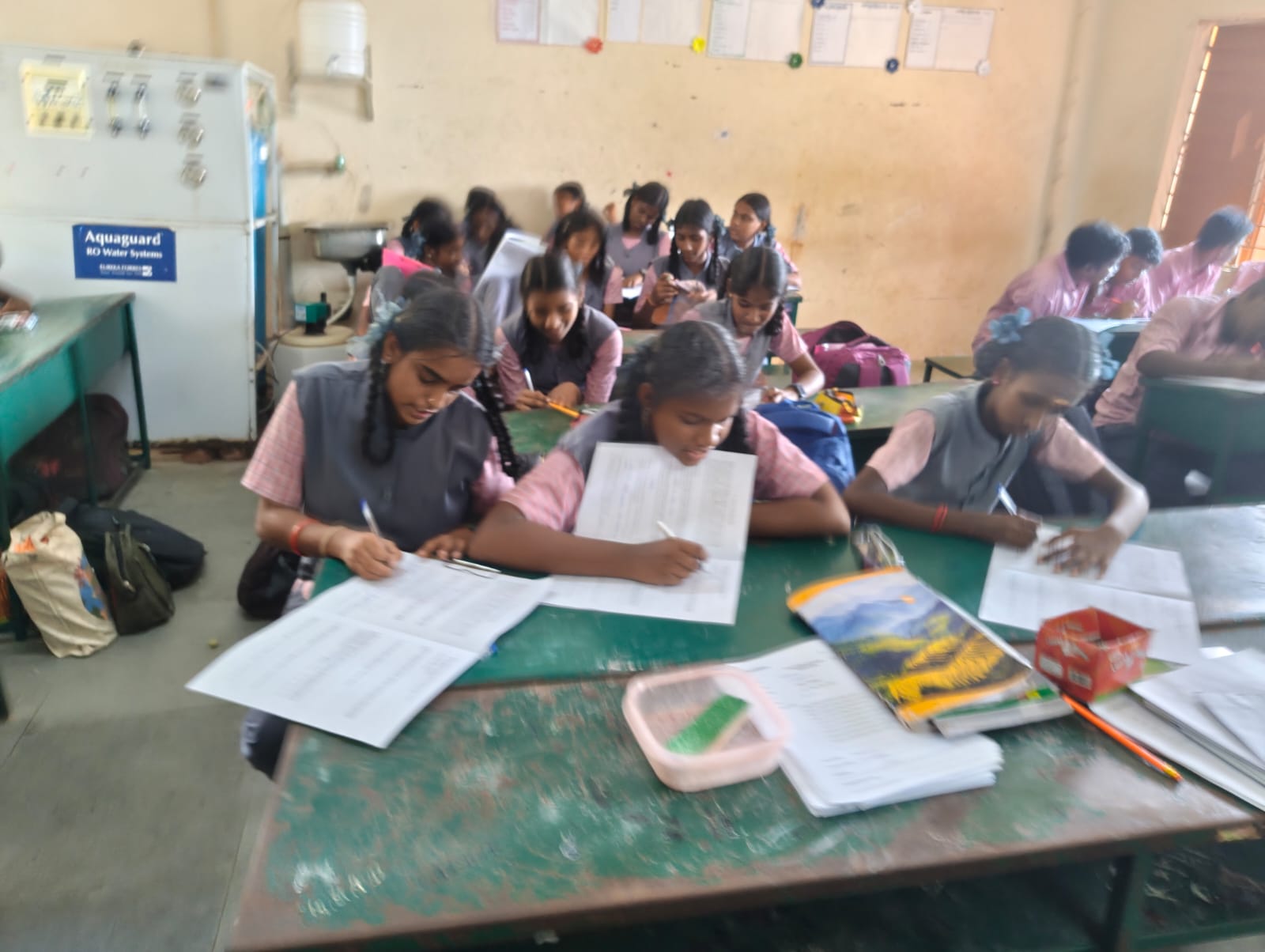
Monthly structured sessions facilitated by the trained teacher. Students work through self-discovery worksheets covering their interests, strengths, dreams, family background, hobbies, learning style, and personality type using the Holland Code (RIASEC) framework. Parents participate in specific workshops. The goal: every student develops a clear, personal understanding of who they are.
Grade 10 — Career exploration & planning
Focus shifts to career options. Students use ILP’s career chart, career planner booklet, website, and app to explore paths. They interview professionals in careers that interest them. Exposure visits take students to hospitals, banks, farms, fire stations, and colleges. Each student identifies their top 3 career options and maps what each path requires.
Post-10th counselling
When 10th results arrive, the trained teacher-counsellor uses all data gathered over two years — self-discovery profiles, interest assessments, parent input, financial context — to provide 1:1 counselling. Students don’t face the decision cold; they’ve been preparing for it. The counselling helps finalise the immediate next step: which stream, which course, which college.
Tracking & continued support
ILP’s mobile app tracks each student’s progress, aspirations, and session feedback — enabling course corrections along the way. For students continuing to 11th and 12th, the program provides ongoing support through the next decision point. The WhatsApp chatbot (93848 80336) remains available for career queries from students and parents anytime.
One model, adapted to every state
Career Guidance is ILP’s largest cross-state effort, run in 8 states and even in remote village schools with no prior access to career information.
Karnataka — a statewide rollout
ILP has proposed a state government MoU to bring career guidance into every government high school in Karnataka — with a career guidance cell staffed by ILP counsellors located inside the Karnataka Education Department itself, teachers nominated and trained as counsellors through each DIET, and all tools provided as free, open resources.
Tamil Nadu — inside Naan Mudhalvan
ILP delivers career guidance under Naan Mudhalvan, the Tamil Nadu government’s flagship skilling initiative, with the Department of School Education. An independent Deloitte assessment found a 4.33:1 social return on investment and coordinator training scaling more than tenfold in two years.
Telangana — state-approved, district by district
Telangana’s Director of School Education has formally approved ILP’s UDAAN program, now running in 7 districts and 700 schools — reaching students in remote, tribal districts like Mulugu and Bhadradri Kothagudem alongside more urban ones.
Jharkhand — reaching tribal, first-generation learners
With local partner TRCSC, ILP brings career guidance and scholarship linkages, alongside science education, to government high schools in Seraikela-Kharsawan and West Singhbhum — districts with a high concentration of tribal, first-generation-learner communities.
Students making informed career decisions
Results across ILP’s career guidance programs in 8 states
The sessions were clear, relevant, and explained in a way students could easily understand. The program doesn’t replace the teacher’s role — it supports and strengthens it, helping teachers gain clearer direction while enabling students to make more informed and thoughtful decisions about their future.
Scaling career guidance through government partnerships
In Karnataka, ILP has entered into an MoU with the state to bring career guidance into every government high school, with a counsellor cell based inside the Education Department itself. In Tamil Nadu, ILP runs the program under “Naan Mudhalvan”, the state’s flagship skilling initiative. In Telangana, the Director of School Education has approved ILP’s program across 7 districts and 700 schools. In Jharkhand, ILP works with local partner TRCSC to reach tribal, first-generation-learner communities. The trajectory is the same everywhere: from standalone program to system-level integration.
Gallery

Help a student discover their path
₹500 per student covers the full 2-year career guidance program including tools, training, and tracking